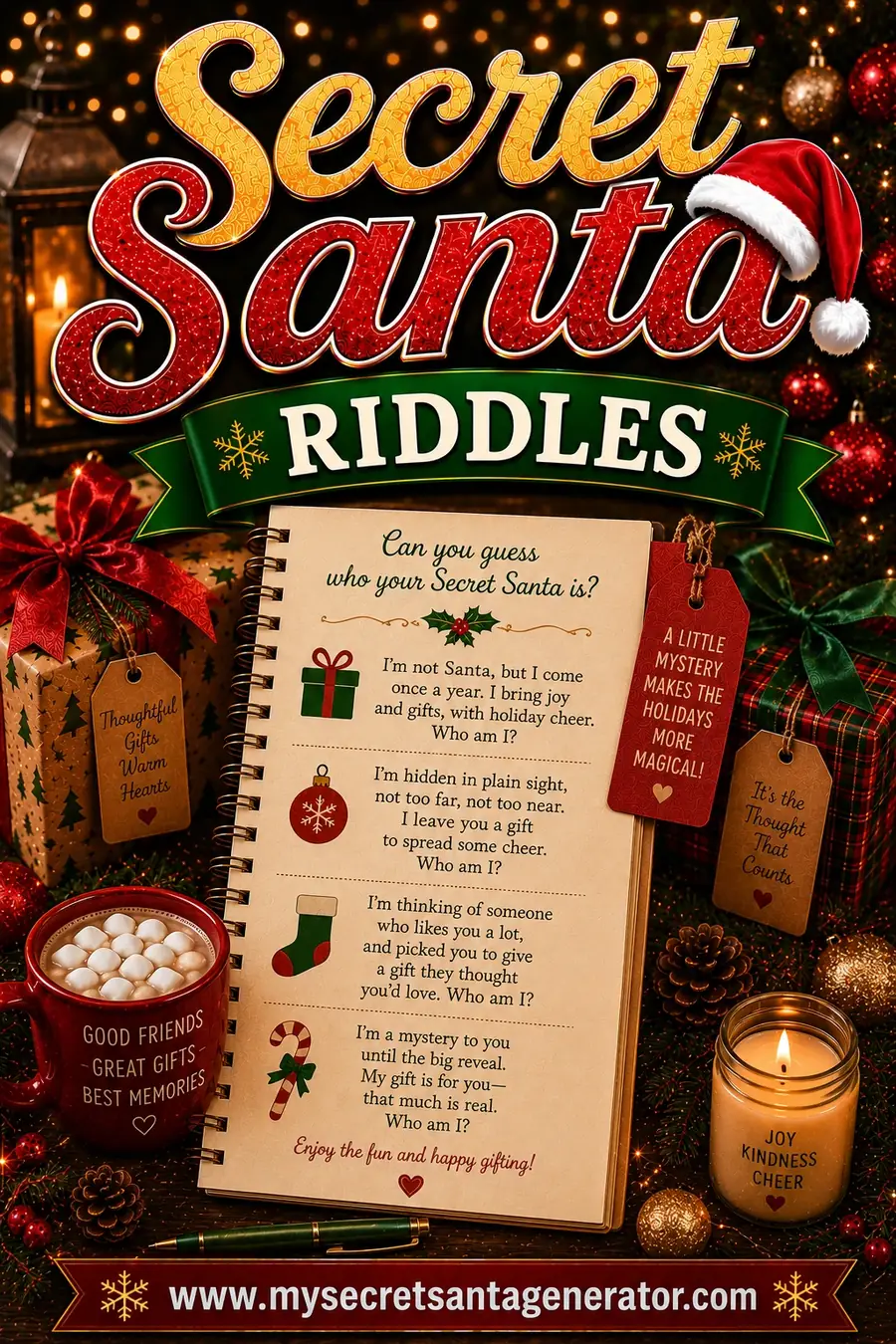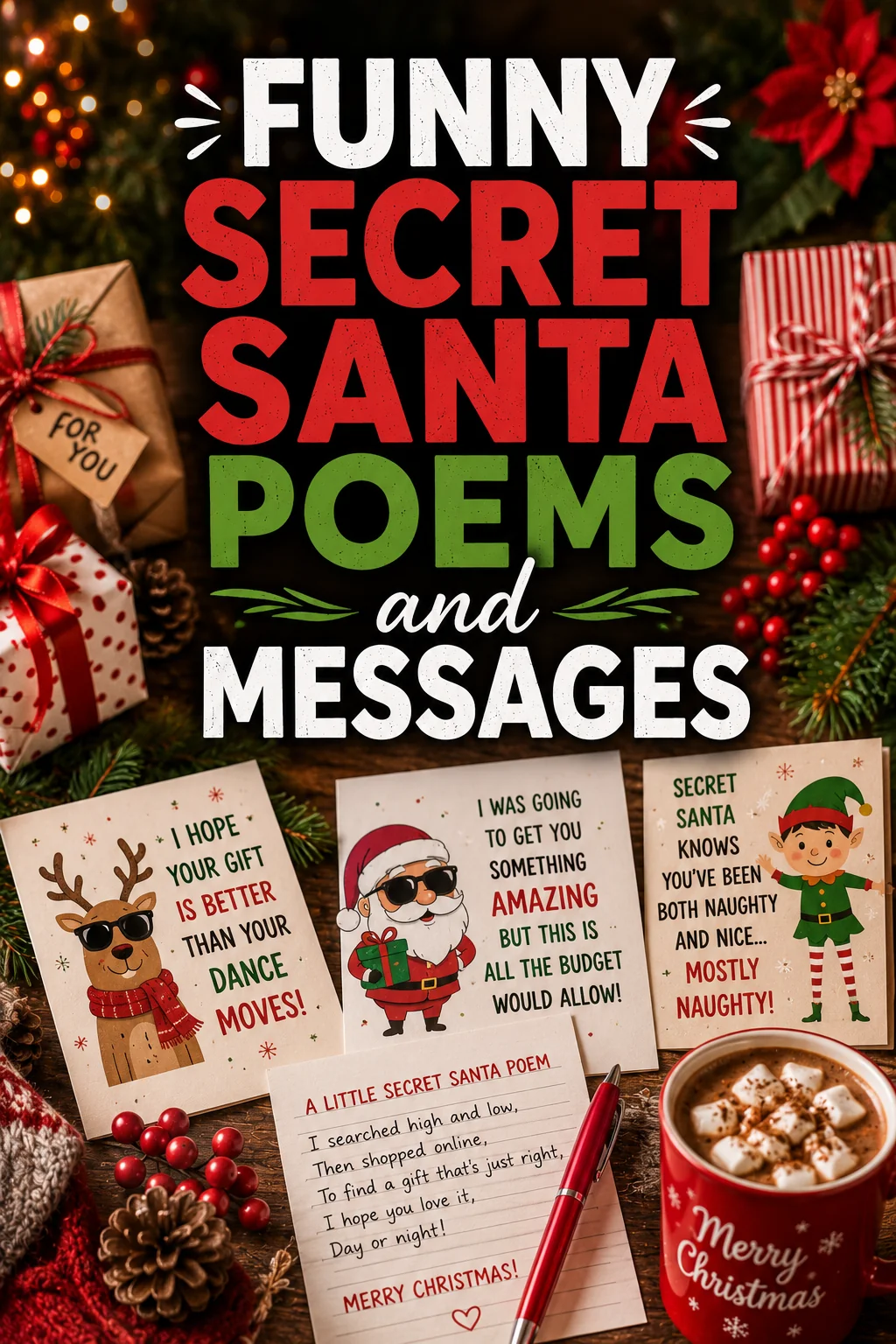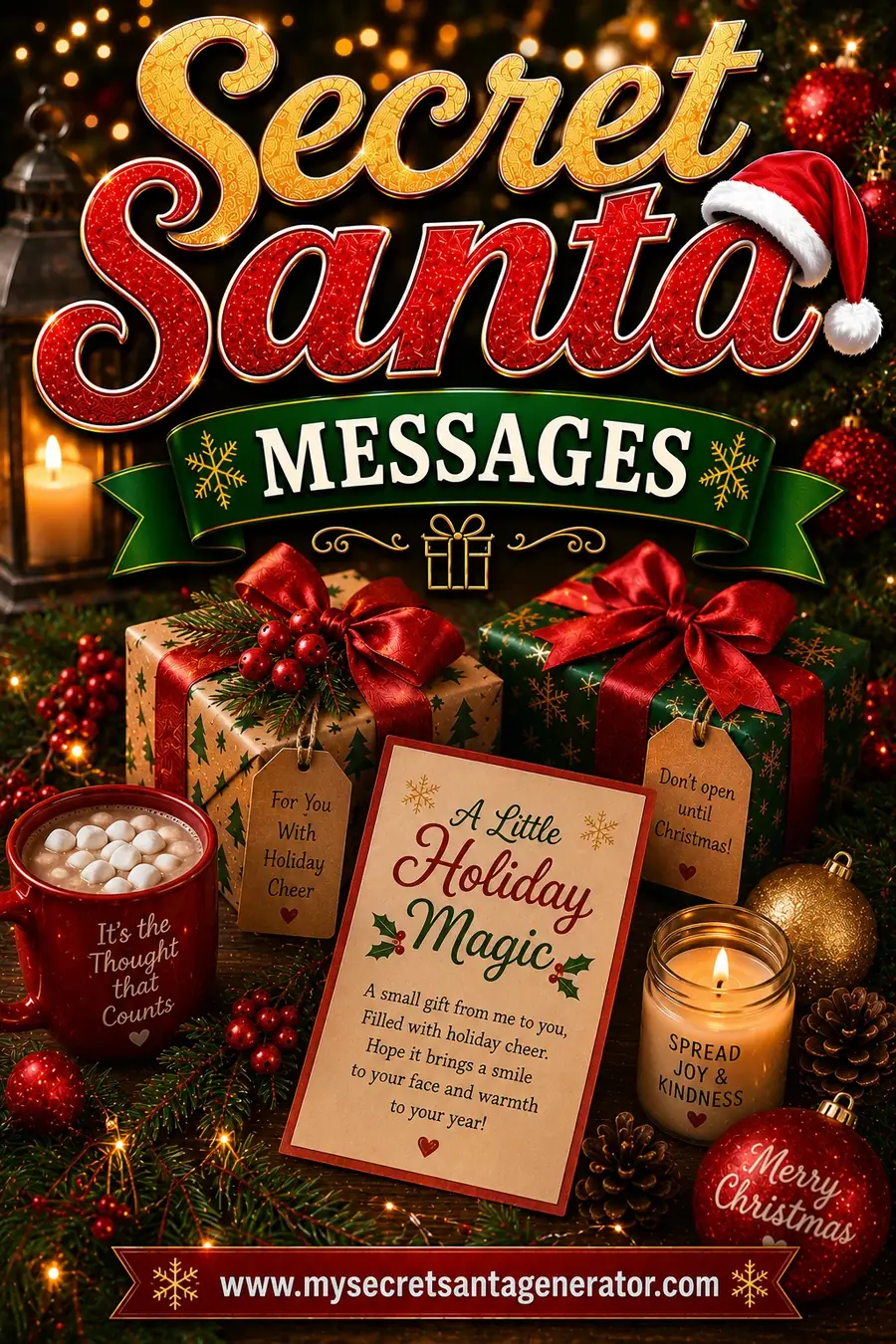
Secret Santa Clues: Build the Anticipation Before the Reveal
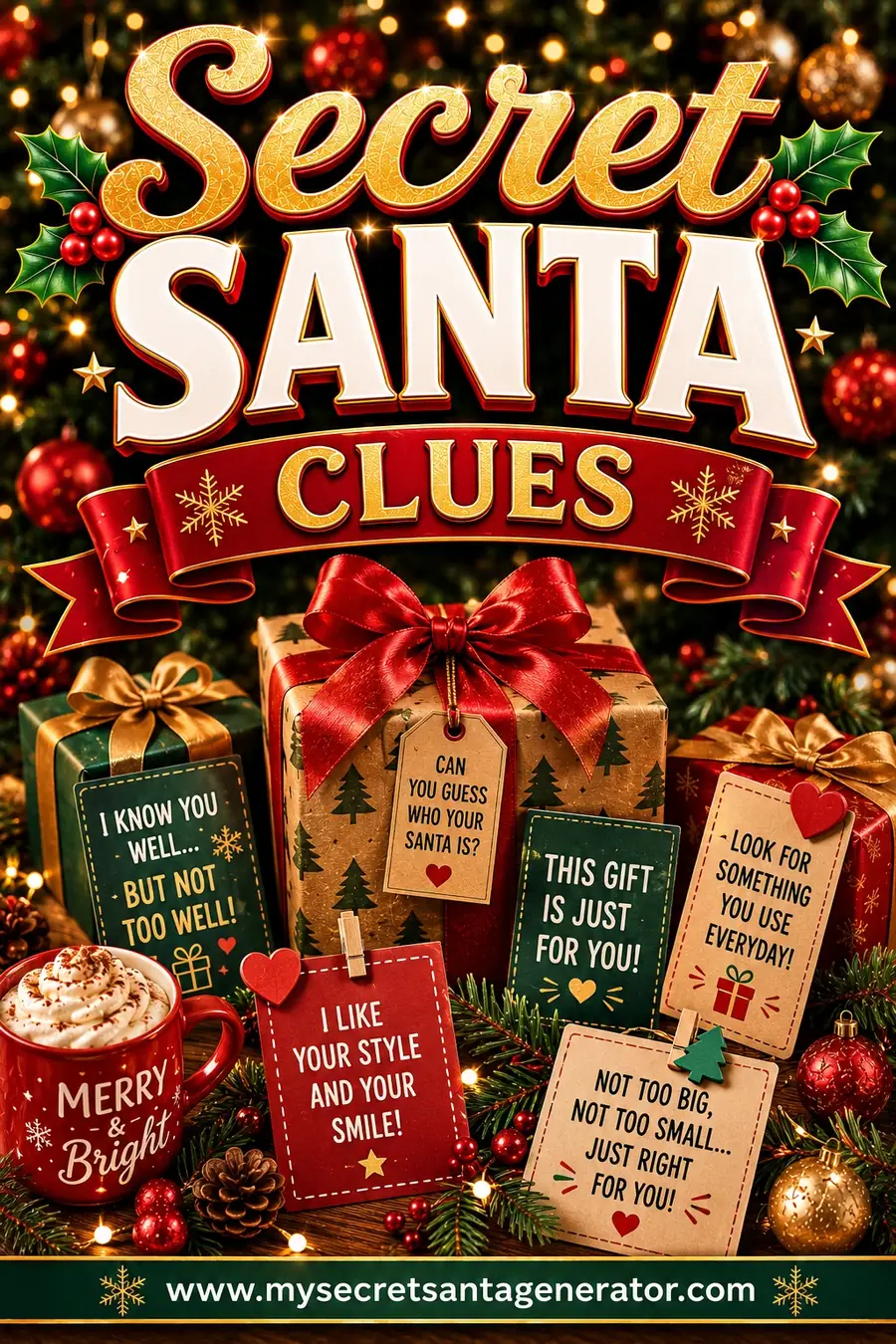
The clue is the part of Secret Santa that most people skip and shouldn't. A good clue creates the moment before the moment — the guessing, the wondering, the "wait, is it..." that transforms a gift exchange into an actual experience.
The clue doesn't have to be elaborate. It doesn't have to be a riddle or a poem or a scavenger hunt. It just has to be a small piece of information that builds anticipation without giving everything away.
Types of Secret Santa Clues
The Cryptic Clue
A short, cleverly worded hint that points toward the gift without naming it.
"Something that keeps its cool better than most people you know."
(For an insulated water bottle or tumbler)
"This will improve the first thing you do every morning."
(For a coffee-related gift, a better alarm clock, a skincare item)
"It's small enough to fit in your pocket but makes a bigger impression than it looks."
(For a quality pen, a card game, a pocket knife)
"Something that will be better off in your hands than in any store."
(A personalized item or a specialty food you chose specifically for them)
The cryptic clue is the most satisfying to receive — the guessing game is the experience.
The Category Clue
Narrows to a category without specifying the exact item. Creates guessing within a space.
"It's something you'll eat, drink, or smell."
(Food gift, candle, or fragrance)
"It's something for your desk, your bag, or your hands."
(Office accessory, tote bag, or hand care)
"It's the kind of thing that makes December better."
(Cozy gift, warm drink, holiday item)
"It lives in the kitchen, but not the kind you use for cooking."
(A food gift, a specialty item, an edible)
The Sensory Clue
Describes how the gift feels, smells, sounds, or looks without naming it.
"It's warm to hold."
(A heated item, a cozy textile, a warm drink kit)
"It smells like a very specific good feeling."
(A candle or fragrance in a particular scent profile)
"It makes a satisfying sound when it works."
(A quality mechanical pen, a card game, a gadget with a good click)
"It looks simple but feels like something that costs more than it does."
(A well-made everyday item)
The Use-Case Clue
Describes when or how the gift gets used.
"This is for the version of you that has exactly fifteen minutes to yourself."
(A self-care item, a bath product, a face mask)
"Best used between 7 and 9 in the morning."
(A coffee gift, a breakfast item, a morning routine product)
"You'll want this around the third week of January."
(A self-care or comfort item for the post-holiday low point)
"This one's for whenever you need a minute that actually works."
(A mindfulness item, a good tea, a calming kit)
The Personality Clue
Ties the gift back to something you know about the recipient specifically.
"I picked this because of something you said in [month] that I didn't think you'd notice I remembered."
(Works for any thoughtful, specific gift)
"This is for the version of you that's been showing up more lately."
(For a wellness, hobby, or interest-specific gift)
"This will make sense the moment you open it."
(For a personalized or inside-reference gift)
"I thought of you immediately when I found this. You'll understand why."
(For any gift that fits their personality distinctly)
The False Lead Clue
Creates deliberate misdirection. More advanced — works best with groups that enjoy the game element.
"This is for someone who runs hot."
(Sounds like it's for a warm person or someone who overheats — but it's actually a spicy food gift, or a heated blanket, or completely unrelated)
"It comes in a box much larger than what's inside."
(Good for small gifts with big packaging)
"Some people use this every day without realizing they need a better version."
(Could be almost anything quality — maximally ambiguous)
How Many Clues to Give
One clue: Standard approach. Delivered with the gift (tucked inside the card) or sent anonymously in the days before the exchange.
Three clues over three days: For groups that want extended anticipation. Send one clue per day in the three days leading up to the exchange. Each clue gets slightly less cryptic.
A clue trail: More elaborate — each clue leads to the next location, with the gift at the end. Works for in-person exchanges where the group is in a single location.
Clues for the Anonymous Phase
If your group does an anonymous gifting phase before the reveal (Pollyanna style), the clue needs to hint at who you are without actually revealing yourself. The challenge: be warm and personal enough to be interesting, but cryptic enough to stay secret.
Hints at shared history without naming it:
"From someone who remembers [vague shared experience reference]."
Hints at your relationship:
"From the person who has been in your corner since [year or event description]."
Hints at your own personality:
"From someone who, true to form, spent an unreasonable amount of time on this."
Completely abstract:
"From someone who thinks you're better than you know."
Writing Clues for Different Gift Categories
For an experience gift: Focus on the outcome, not the activity. "This is for the version of you that's been saying 'I've always wanted to try that.'" Works for a class, a food tour, a ticket, any experience gift without naming the type.
For a food or drink gift: Lead with the sensory experience. "It smells amazing and you should probably not share it." "This one's best enjoyed in complete silence with nobody interrupting." The implied ritual around the gift creates anticipation.
For a cozy or self-care gift: Use the time and occasion. "Best deployed on a particularly gray Tuesday when you have nowhere to be." "This one is for the hour after everything else is done."
For a custom or personalized gift: The reveal is the clue. "You'll understand the moment you open it." Sometimes the best clue is the honest acknowledgment that the clue would give it away.
For a gift card: The clue is the experience it unlocks, not the denomination. "For whenever you finally go back to that place." "For the next thing you've been putting off buying."
Matching the clue style to the gift category makes the clue feel intentional rather than generic. A sensory clue for a food gift lands harder than a vague cryptic one. A calendar clue for a self-care gift is more evocative than a riddle.
Frequently Asked Questions
What is a Secret Santa clue?
A hint about the gift or gifter that builds anticipation before the reveal. It can be cryptic, sensory, category-based, or personal — anything that creates the guessing game without fully giving away what's inside.
When do you give a Secret Santa clue?
Either with the gift (tucked in the card) or sent anonymously in advance. The advance clue creates more extended anticipation; the clue-with-the-gift adds a fun guessing layer to the unwrapping moment.
What makes a good Secret Santa clue?
It creates a genuine guess. Too easy and it's just a description; too cryptic and it's just confusing. The best clue is one where the recipient thinks "oh, it must be..." and then is either right (satisfying) or pleasantly wrong (surprising).
Can clues be funny?
Yes — deliberately misleading clues are a specific and popular category. Describing the gift in technically accurate but maximally confusing terms ("something that has never been to space" for almost any gift) is its own genre of Secret Santa humor.
What if the clue accidentally gives too much away?
The hint has done its job — the recipient knows the gift is coming and will enjoy it regardless. Over-revealing doesn't ruin anything. Under-revealing (a clue so cryptic it's just confusing) is the bigger risk.
Should you give a clue for every Secret Santa gift?
It's optional, but it's one of the easiest ways to make a standard exchange more memorable. A single sentence of anticipation takes less than a minute to write and produces a disproportionate amount of enjoyment.