
White Elephant Gift Exchange Rules: How to Play Without the Drama
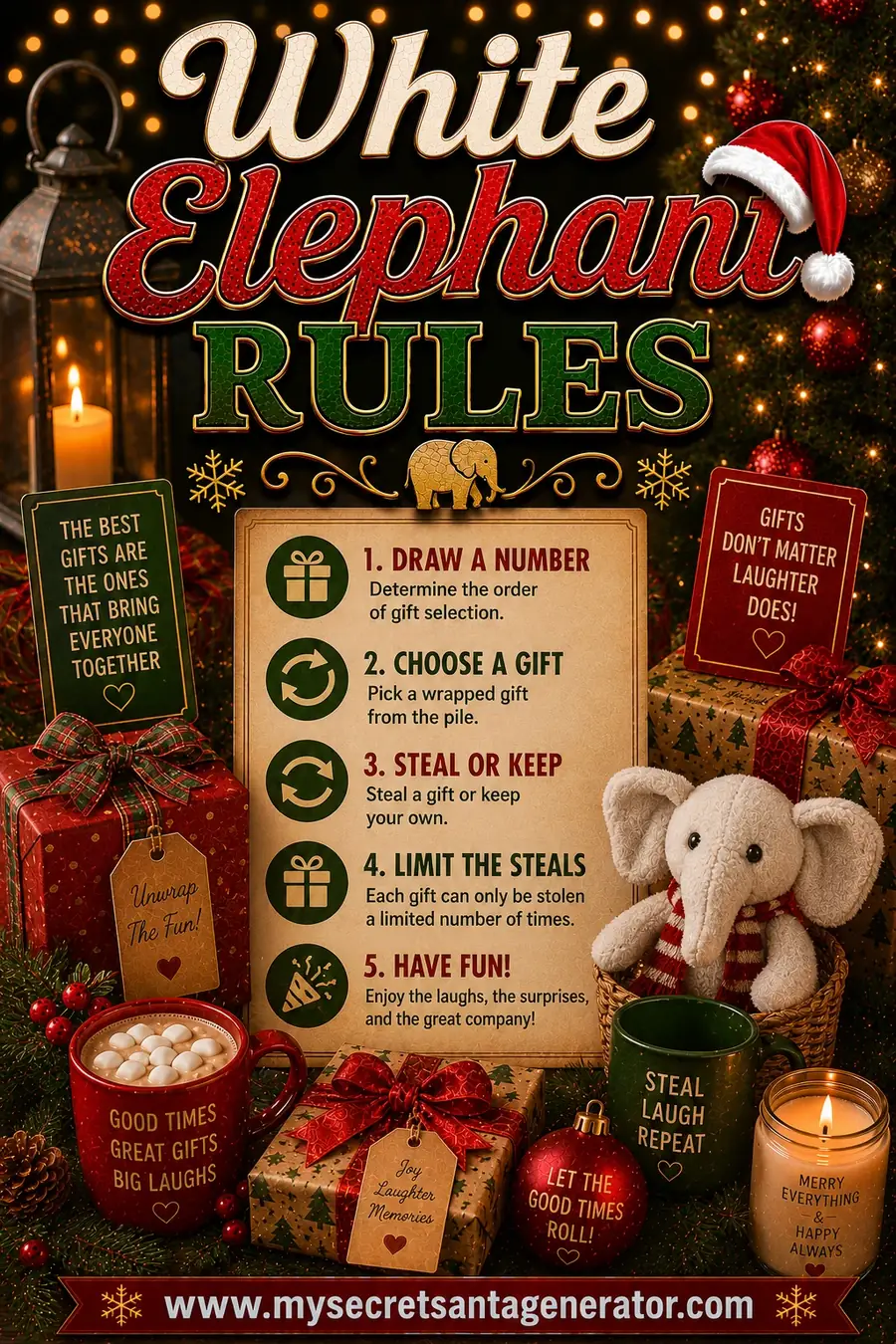
White elephant is the gift exchange format that turns ordinary people into calculating strategists. Someone brings a gift that looks suspicious. Someone else steals the Yeti tumbler from the third person in a row. Someone holds onto their gift with fierce determination until they realize the thing they're protecting got stolen twenty minutes ago.
It's chaotic, it's competitive, and it's one of the most genuinely entertaining holiday traditions in the calendar. Here's exactly how it works.
The Core Rules
Setup
Each participant brings one wrapped gift, valued at whatever the agreed-upon budget is (usually $15–$30). All gifts are placed in a central pile. Nobody knows who brought what.
The Number Draw
Participants draw numbers to determine their turn order. The lower your number, the earlier you go — which sounds like an advantage, but isn't always.
How Turns Work
Person 1 picks any wrapped gift from the pile and opens it. Everyone sees what it is.
Person 2 can either: (a) pick a new unopened gift from the pile, or (b) steal Person 1's opened gift.
If Person 2 steals, Person 1 must open a new gift from the pile.
Each subsequent person continues the same pattern: take from the pile unopened, or steal any previously opened gift.
A stolen gift cannot be immediately re-stolen on the same turn — it is "frozen" for one full round. This prevents endless chains of the same gift being stolen back and forth.
The Stealing Limit
Most groups use a maximum of three steals per gift — once a gift has been stolen three times, it is "frozen" permanently and belongs to whoever has it. This protects the most coveted items from being stolen indefinitely.
The Last Person's Advantage
The last person in turn order can steal any opened gift or open a new one. This is the best position in the game — last pick, full information, maximum options.
The End of the Game
After the last person takes their turn, the game traditionally gives Person 1 one final option: they can steal any gift in the room (since they opened first and were most vulnerable). If they steal, the person whose gift was taken must open the last remaining wrapped gift (if any). Once no wrapped gifts remain, the game ends.
The Most Common Rule Variations
White elephant rules vary significantly by group. Establish these before the game starts to prevent debates mid-round:
Steal limit per gift: Most common is 3 steals per gift. Some groups use 2 (faster game, less chaos) or unlimited (maximum drama, not recommended for groups with competitive personalities).
Steal limit per turn: Some groups allow only one steal per turn total. Others allow unlimited chains — Person 3 steals from Person 1, then Person 2 steals from Person 1's replacement, etc. Unlimited chains create more chaos and longer games.
Round freeze: Some groups freeze each gift once it's been stolen once (not three times). This speeds the game up significantly.
Wrapping rules: Some groups require disguised wrapping — a beautiful gift might be wrapped to look terrible, and vice versa. This changes the strategy since visual cues are deliberately misleading.
Reveal timing: Some groups open all gifts simultaneously at the end and then steal. This is a different game — faster, with less individual anticipation but more information before the steal phase.
What Makes White Elephant Gifts Different
A white elephant gift needs to appeal to a room of people who don't know what's in it — because the goal is to be worth stealing. This changes the gift calculus significantly from Secret Santa.
Good for white elephant: Crowd-pleasing consumables (a quality snack set, artisan chocolate), a universally useful item (a Hydro Flask, a quality candle), a genuinely funny item the whole room reacts to, or a desirable experience (a gift card to a beloved local restaurant or experience).
Bad for white elephant: Extremely personal gifts, inside-joke items, anything that's only relevant to one specific person's taste, or anything too weird to want and too strange to steal.
The test for a white elephant gift: "Would multiple people in this room want to steal this?" If the answer is yes, you've chosen correctly.
Common Questions and Edge Cases
What if two people want the same gift and keep stealing it?
The three-steal limit handles this. After three steals, the gift freezes with whoever has it. If you've played out three steals on one gift, it's someone's permanent prize.
What if someone steals a stolen gift before the frozen round is up?
The gift is frozen for the current round, not a period of time. If Person 5 steals from Person 3 in round 5, the gift cannot be stolen again until it's someone else's turn in round 6. Keep track with a simple "this one's frozen" announcement when the steal happens.
What happens if someone can't make it?
Common fix: their wrapped gift still gets played — someone takes it on their behalf, the person who opens it keeps whatever they would have had. Alternatively, remove them from the player list and draw a new number sequence.
Can Person 1 steal any gift at the end, including frozen ones?
Depends on your house rules. Most groups allow Person 1 to steal any gift — frozen gifts are fair game in this final move. Decide this before the game starts.
Quick Reference: Standard White Elephant Rules
- Each person brings one wrapped gift
- Draw numbers for turn order
- On your turn: take an unopened gift OR steal any open gift
- Stolen gifts are frozen for one full round before being eligible again
- Maximum 3 steals per gift (then frozen permanently)
- Person 1 gets one final steal option at the end of all turns
- Game ends when all gifts are claimed
Post these somewhere visible at the party. Rules disputes cause more drama than stolen gifts.
Frequently Asked Questions
What is the standard white elephant gift exchange rule?
The standard: each person brings one wrapped gift, takes turns either opening a new gift or stealing an opened one, and each gift can be stolen a maximum of three times before being frozen permanently. Stolen gifts cannot be immediately re-stolen.
How many times can a gift be stolen in white elephant?
The most common rule is three steals per gift. After the third steal, the gift is frozen and belongs permanently to whoever holds it. Some groups use two steals; very competitive groups allow more.
What does "frozen" mean in white elephant?
Frozen means a gift cannot be stolen again on the same round it was stolen. After it's been stolen, it must stay with its current holder for at least one full round before being eligible for stealing again.
Does the last person have an advantage in white elephant?
Yes — the last position is generally the strongest because you have full information about all opened gifts and can steal anything. Person 1's consolation is the final-move steal option at the end of the game.
Can you steal a gift that's been frozen permanently?
No — once a gift hits the steal limit (usually three), it belongs to whoever has it. No further stealing is allowed, including from Person 1's end-game move (though many groups allow this as a house rule — decide before the game).
What's the ideal group size for white elephant?
6–16 people is the sweet spot. Below 6, there aren't enough gifts for interesting strategy. Above 20, turns take a long time and engagement drops. For large groups, consider adding rule variations to speed up the game.