Cookie Exchange Party: The Complete Host's Guide

A cookie exchange party is the rare holiday gathering where the guests do most of the work — and everyone is happy about it. The format is simple: each person bakes one recipe in bulk, brings it, and goes home with a full assortment of everyone else's cookies. You bake once and end up with eight kinds of cookies on your counter.
That is why it is the easiest holiday party to host. You are not cooking for twelve people. You are providing a table, some coffee, and a little bit of structure. The guests bring the food. Your entire job is to organize it well enough that nobody shows up with the same recipe and everybody leaves with a full box.
How a Cookie Exchange Works
The core format has been the same for decades because it works:
- Each guest picks one cookie recipe and claims it in advance so no two people bring the same thing.
- Each guest bakes a set number of cookies — usually one dozen per guest attending, plus a small extra plate for tasting at the party.
- Everyone brings their cookies to the party on a platter, arranged at their own station on a long table.
- Guests circulate with an empty box or tin and take a dozen of each variety.
- Everyone goes home with as many cookies as they brought, but in eight or ten different kinds.
That is it. No potluck coordination, no menu planning, no worrying that three people brought potato salad. The math does the work.
The party itself is usually two hours: an hour of mingling, coffee, and tasting, then the actual exchange, then goodbyes. Some hosts do the exchange first so people can relax afterward without watching the clock. Either order is fine — just announce it when guests arrive.
How Many Cookies Should Each Person Bring?
This is the question that trips up every first-time host, and getting it wrong is the most common way a cookie exchange party goes sideways.
The simple rule: each guest brings one dozen cookies per guest attending, plus one extra dozen for the tasting plate.
So at a party of eight people, each person brings eight dozen to swap plus one dozen to taste — nine dozen total, 108 cookies. That is a lot of baking. For most groups, it is too much.
The friendlier rule: six cookies per guest instead of twelve. Everyone still goes home with a wide variety, but the baking load is cut in half. For a group of ten, that is 60 cookies instead of 120 — one long afternoon instead of a full weekend.
Pick one rule, state it clearly in the invitation, and don't let it drift. Here is the math either way:
| Guests | Full Dozen Rule | Half Dozen Rule | Each Guest Goes Home With |
|---|---|---|---|
| 6 guests | 7 dozen each (84 cookies) | 3.5 dozen each (42 cookies) | 6 varieties |
| 8 guests | 9 dozen each (108 cookies) | 4.5 dozen each (54 cookies) | 8 varieties |
| 10 guests | 11 dozen each (132 cookies) | 5.5 dozen each (66 cookies) | 10 varieties |
| 12 guests | 13 dozen each (156 cookies) | 6.5 dozen each (78 cookies) | 12 varieties |
A word of advice from hosts who have done this a few times: eight to ten guests is the sweet spot. Below six, the variety isn't exciting. Above twelve, the baking becomes a genuine burden and people start dropping out in the last week.
Setting the Rules Before Anyone Bakes
Rules sound stiff for a party about cookies, but every one of these exists because a host learned it the hard way. Put them in the invitation, not in a text message three days before.
Homemade only. This is the one non-negotiable rule. The whole point is that someone made these. A box of store-bought cookies on the table feels different, and everyone notices. Say it warmly but say it plainly: "Homemade only, please — even if it's the easy recipe."
One recipe per person. Not three kinds of six. One recipe, made well, in quantity. It's less work for the baker and it keeps the table readable.
No duplicates — use a sign-up. This is the rule that actually requires effort from you. Set up a shared list (a group chat, a shared doc, or a simple reply-to-all thread) and have people claim their recipe as they commit. Two gingerbread recipes is a disappointment; two sugar cookies is a disaster. First to claim it gets it.
Label allergens — especially nuts. Every baker writes the recipe name and any of the big allergens on a card: nuts, dairy, eggs, gluten. This is not optional. Someone at your party has a kid with a peanut allergy, and they need to be able to read the table.
Container requirements. Tell guests exactly what to bring: cookies on a serving platter or tray for display, plus an empty container to carry their haul home. A shirt box, a tin, or a shallow storage container all work. Tell them to bring something bigger than they think they need.
A recipe card to share. Ask each baker to bring their recipe written out, or a stack of copies. Half the joy of a cookie exchange is going home with the recipe for the thing you liked most.
Planning Timeline
Three weeks out. Send the invitation. Include the date, the cookie count rule, the homemade-only rule, and a link to the recipe sign-up. Ask for an RSVP by a firm date, because the cookie count depends on the final headcount.
One week out. Lock the guest list and send the final number: "We're 9 people, so bring 5 dozen." Confirm nobody has duplicate recipes. Remind everyone to bring a take-home container, a serving platter, and their recipe card.
The day before. Clear and set the exchange table. Put out labels, tongs or small serving spoons, and stacks of napkins. Make space in your kitchen for platters to land as guests arrive. If you're serving anything savory, make it now — cookie parties need something salty to balance the sugar.
The day of. Set out coffee an hour before. Greet guests, take their platter, and walk it to their station. Announce the exchange time when everyone has arrived so no one is caught mid-conversation.
Setting Up the Table
The table setup is the difference between an organized exchange and a scrum.
- One cookie type per station. Give each variety its own spot with a little breathing room. Guests move down the line like a buffet.
- A label at every station with the recipe name, the baker's name, and allergens in bold. Pre-print blanks so latecomers can fill one out.
- Tongs or a small spatula at every station. Nobody wants twelve sets of hands on the shortbread.
- Recipe cards next to each platter, either a stack to take or one copy people can photograph.
- Take-home boxes at the start of the line. Even though you asked guests to bring containers, keep a stack of cheap bakery boxes or gallon zip bags on hand. Someone always forgets.
- A separate tasting plate, away from the exchange table, holding a few of each variety. This keeps people from eating the cookies that are meant to be swapped.
Cookie Exchange Party Games & Extras
The exchange itself takes fifteen minutes. Fill the rest with something easy:
Best cookie vote. Give everyone three small stickers or slips of paper to drop in a cup at their favorite stations. Categories work well: Best Overall, Prettiest, Most Likely to Disappear First. A cheap ribbon or a $10 gift card makes it feel real.
Recipe swap. Collect a copy of every recipe, and email the full set to everyone the next day. It costs you ten minutes and people genuinely keep it.
Hot cocoa bar. A pot of cocoa, plus whipped cream, marshmallows, peppermint sticks, cinnamon, and caramel sauce in small bowls. It is the cheapest way to make the party feel like an event.
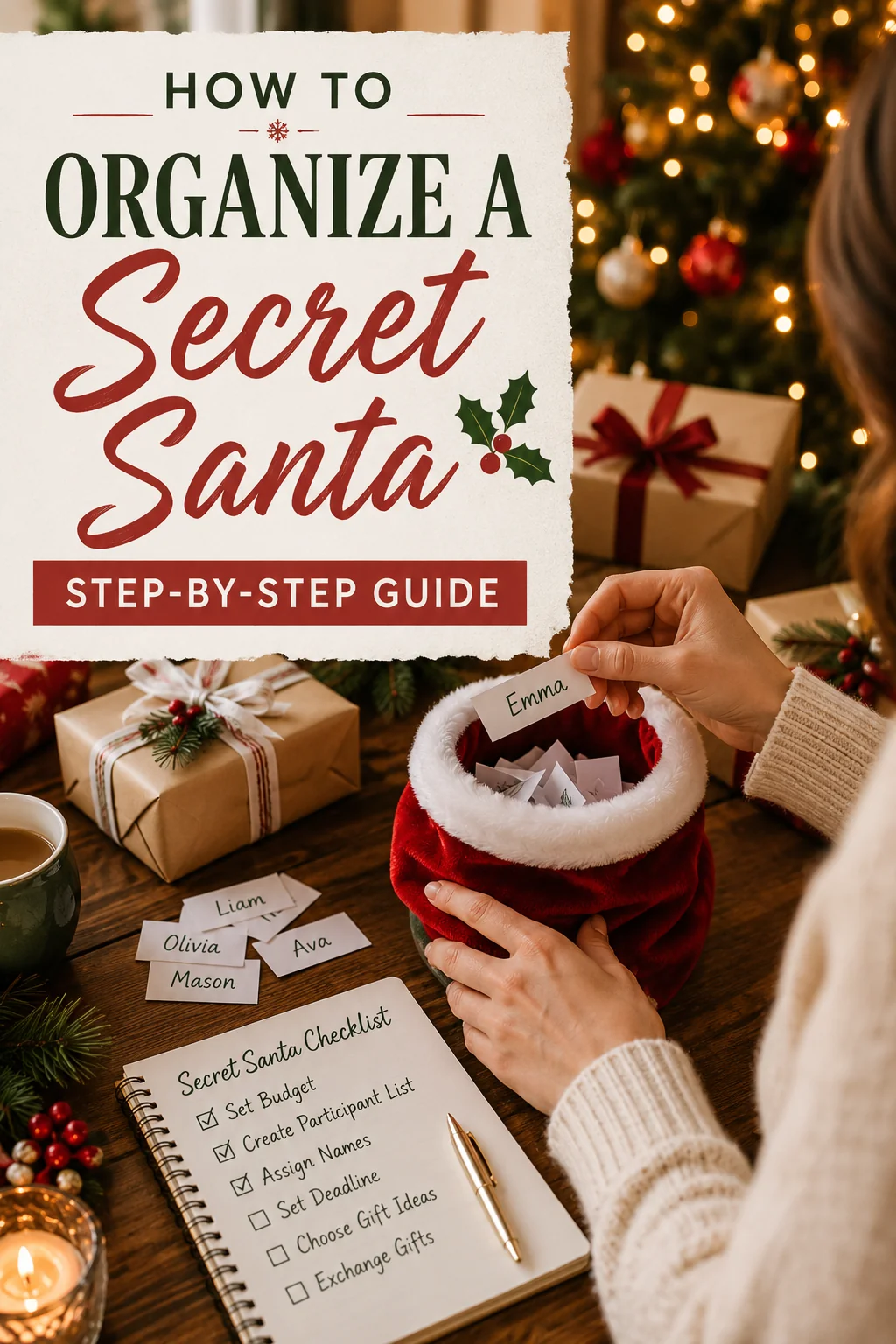
Pair it with a gift exchange. A cookie exchange and a small gift swap fit together naturally — same guests, same evening, same festive mood. Set a low budget ($15 or $20), draw names ahead of time, and open gifts after the cookies are boxed. If you want the swap itself to be entertaining, our guide to gift exchange games covers White Elephant, dice games, and steal-based formats that work well with a group already standing around a table.
Common Mistakes to Avoid
Not enough containers. Guests underestimate how much they're taking home, every single time. Keep a backup stack of boxes or bags.
No allergen labels. The most preventable problem at any cookie party. Nuts especially — write it in bold on every card.
Letting store-bought slide. If you don't say "homemade only" clearly in the invitation, someone will bring a package from the grocery store bakery, and it changes the feeling of the whole table.
Too many chocolate chip. Without a sign-up sheet, you will end up with three chocolate chip variations and no bar cookies, no shortbread, and nothing with fruit. The sign-up is the whole game.
Unclear cookie counts. "Bring a few dozen" produces one guest with 200 cookies and one with 18. Give an exact number.
Frequently Asked Questions
How many cookies should each person bring to a cookie exchange?
One dozen per guest attending is the traditional rule, plus an extra dozen for tasting at the party. For a group of eight, that's nine dozen. If that feels like too much baking, use the half-dozen rule instead — six cookies per guest — and everyone still goes home with the full variety.
Can people bring store-bought cookies?
The standard answer is no, and it's worth holding the line. Homemade is the entire point of the format. That said, be kind about it — if someone genuinely can't bake, invite them to bring drinks, napkins, or the take-home boxes instead. Nobody should skip the party over an oven.
What if someone cancels at the last minute?
Don't recalculate anything. The remaining guests simply take a slightly larger share of each variety, or go home with a few extra of their own. If two or three people drop out at once, send a quick group message the day before with the updated number so nobody over-bakes.
Do I need to provide take-home boxes?
You should ask guests to bring their own container — a tin, a shirt box, a shallow storage tub. But keep a stack of inexpensive bakery boxes or gallon zip bags on hand anyway. Someone always forgets, and a guest holding sixty cookies with nowhere to put them is an awkward end to a good party.
A cookie exchange party works because it splits the effort so evenly that nobody feels like they carried it. Send the invitation early, hand out the rules with the date, set the table so the line moves, and the party mostly runs itself.
And if you want to turn it into a proper holiday evening, add a small gift swap on the side — draw names in advance so people can shop, keep the budget low, and open gifts once the cookie boxes are packed. Our free generator handles the draw in about two minutes, so all you have to do is remember to preheat the oven.