How Much to Spend on Secret Santa: The Right Budget
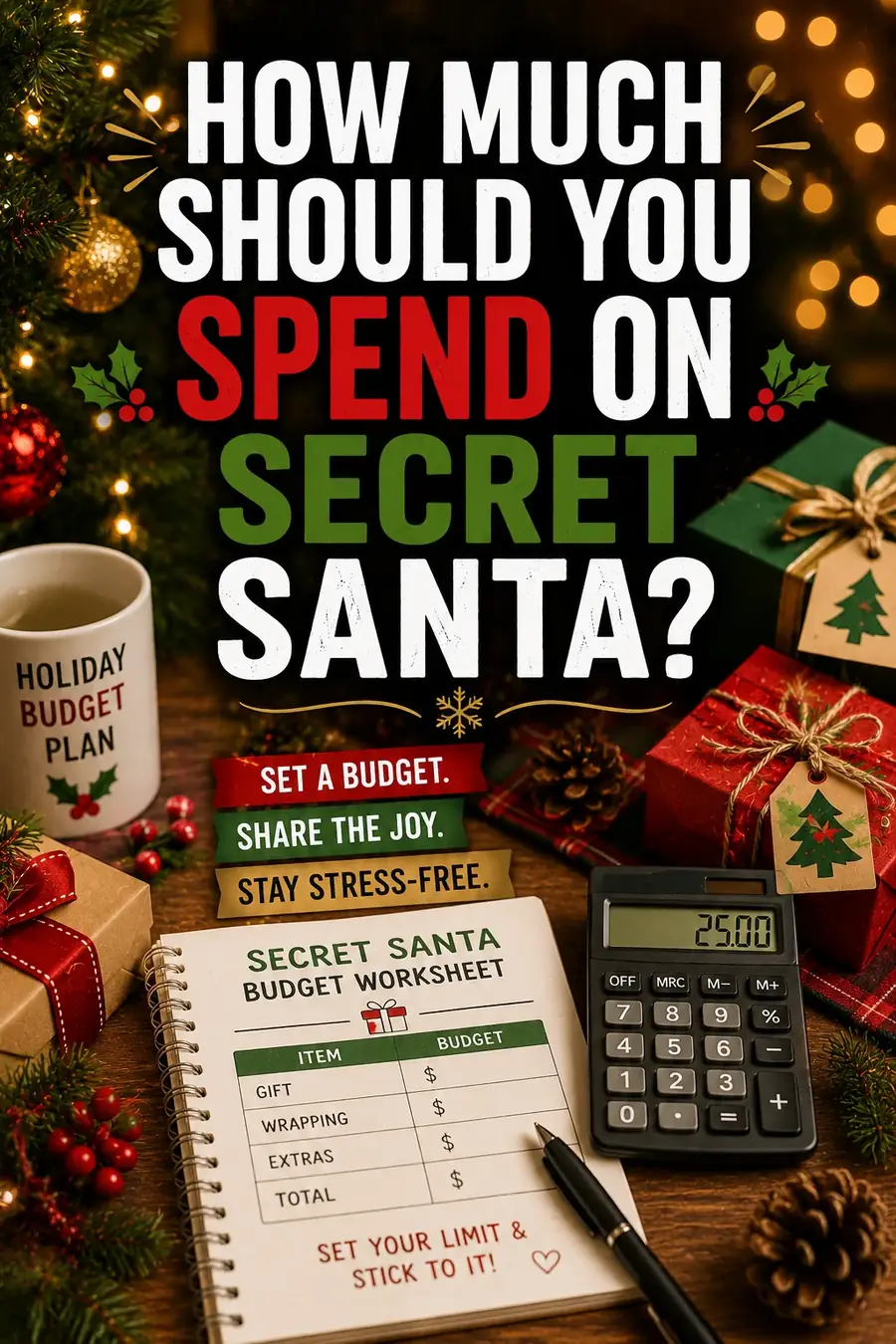
Someone in the group chat always asks it first: "So... what's the budget?" And then a long, awkward pause while everyone waits for someone braver to name a number. Figuring out how much to spend on Secret Santa feels weirdly high-stakes — set it too high and people grumble about the cost, set it too low and the gifts feel like an afterthought.
Here's the good news: there's no mystery to it. Every group has a comfortable range, and once you know the typical numbers for your setting, picking a cap takes about thirty seconds. This guide walks through what people actually spend, how to land on a number the whole group is happy with, and the small rules that keep everyone playing fair.
The Short Answer
Most Secret Santa exchanges land somewhere between $15 and $30 per person. That range is popular for a reason — it's high enough to buy something genuinely nice, low enough that nobody feels the pinch, and easy to split the difference on.
But the "right" number really depends on context. A quick reference before we get into the details:
| Setting | Typical Range | Sweet Spot |
|---|---|---|
| Office / coworkers | $10 - $25 | $20 |
| Close friends | $20 - $50 | $25 - $30 |
| Family | $25 - $50 | $30 |
| Kids' exchange | $10 - $20 | $15 |
| Large group (10+) | $10 - $20 | $15 |
If you only remember one thing: $20 is the safe default for almost any adult group. When in doubt, name that number and move on.
Budget by Setting
The people in the room change the math more than anything else. Here's how the common settings break down.
Office and Coworkers
Workplace exchanges lean lower on purpose — $10 to $25, with $20 as the classic pick. You're buying for someone you may not know well, and a smaller cap keeps the gifts light, funny, or practical rather than personal. It also keeps things fair across pay levels, which matters more at work than anywhere else. Nobody should feel awkward because the intern and the director are held to the same $40 standard.
Close Friends
Friends can go a little higher — $20 to $50, often settling around $25 to $30. You know each other's taste, so the money goes further and the gifts get more thoughtful. If your friend group does a fun, gag-gift style exchange, keep it at the lower end. If it's the kind of group that puts real effort in, $30 gives everyone room to nail it.
Family
Family exchanges tend to run $25 to $50. Families often use Secret Santa specifically to avoid buying for everyone, so the per-person budget is a bit more generous — you're spending on one relative instead of eight. $30 is a comfortable middle that works whether it's the immediate family or a big extended-family draw.
Kids
For a children's exchange, keep it low: $10 to $20, with $15 being plenty. Kids care about the fun of the gift, not the price tag, and a low cap keeps parents from quietly footing an expensive bill. Toys, books, and small games all fit easily in this range.
Large Groups
The bigger the group, the lower the cap should go — $10 to $20 for anything over ten people. A large exchange usually means less familiarity between giver and recipient, and a modest budget keeps participation easy. Nobody wants to spend $50 on a coworker three desks over they've barely met.
Once you've picked a range, the next step is actually running the draw — you can assign names for free here in about two minutes, no sign-ups or spreadsheets required.
How to Set a Budget Everyone's Comfortable With
Naming the number is where groups get stuck. Three approaches that work:
Let the organizer set it. The simplest option. If you're running the exchange, just pick a sensible number from the ranges above and announce it as decided, not up for debate. "Budget is $25 — happy shopping!" Most people are relieved someone made the call. Confidence prevents the endless back-and-forth.
Take a quick vote. If your group likes a say, offer two or three options and let people pick: "$15, $20, or $25 — reply with your choice." Go with the winner. This works well for friend groups where everyone wants to feel included in the decision.
Use a tiered or "up to" cap. Instead of an exact figure, set a ceiling: "spend up to $25." This quietly solves the biggest fairness worry — people on a tighter budget can spend $12 without it being obvious, while others can go closer to the cap. Everyone lands in the same neighborhood without anyone feeling exposed.
Whatever you choose, decide early. Announcing the budget along with the draw gives everyone the most time to shop thoughtfully instead of panic-buying the night before. If you want the full breakdown of how to pick a number for your specific group, our Secret Santa budget guide goes deeper.
What Happens When People Overspend or Underspend
The whole point of a budget is to keep gifts roughly equal, and it usually works — but not always. Two things go wrong.
Overspending is the more common problem. Someone gets excited, finds the "perfect" gift, and blows past the cap. It seems generous, but it puts pressure on everyone else and can make the recipient feel awkward for receiving something clearly worth double the limit. The person who stuck to $20 suddenly looks stingy through no fault of their own.
Underspending stings the recipient. When one gift obviously cost $5 in a $25 exchange, it reads as low effort, even if the giver just misjudged. It's rarely malicious — usually a busy person who grabbed something last-minute.
The fix for both is the same: make the cap clear and remind people once. A short message a week before — "friendly reminder, we're keeping gifts around $25" — heads off almost all of it. Most overspending and underspending comes from vagueness, not bad intentions. When the number is stated plainly and repeated once, people naturally aim for it.
Budget-Friendly Rules That Help
A few simple ground rules do more than the dollar figure alone. These are the ones worth borrowing:
- Ask for wishlists. When everyone shares a short list of things they'd actually like, givers spend the whole budget on something wanted instead of guessing. It's the single biggest upgrade to gift quality at any price point.
- Enforce the price cap gently. Ask people to keep receipts or just take the number at face value. You don't need to police it — naming it clearly is usually enough. The cap works because everyone agreed to it, not because it's audited.
- Use the "one gift" rule. One thoughtful item, not a pile of small fillers stuffed to hit the budget. A single $25 gift beats five $5 trinkets almost every time, and it keeps the exchange from turning into a wrapping-paper marathon.
- Allow homemade or "spend zero" options. If your group is up for it, let people give something made rather than bought. It levels the field for anyone whose budget is tight this year.
For a fuller set of ground rules — from timing to swaps to no-shows — the gift exchange rules guide covers the standard playbook.
When to Skip a Dollar Cap
Not every exchange needs a hard number. A few situations where a cap gets in the way:
Close-knit groups who trust each other. If it's four best friends who've done this for years, you may not need a limit at all — everyone already spends in the same ballpark by instinct.
Theme-based exchanges. When the gift is defined by a theme instead of a price — "something handmade," "the funniest thing under your roof," "a book you love" — the theme does the leveling. A homemade-only exchange naturally keeps costs low without a number attached.
White elephant and gag exchanges. These live on absurdity, not value. A strict dollar cap can actually kill the fun; a loose "keep it cheap and ridiculous" guideline works better.
Even here, a soft suggestion helps — "aim for something small" — so nobody accidentally shows up with a gift that dwarfs everyone else's. The goal is always the same: gifts that feel roughly equal, so the focus stays on the fun and not the receipts.
Frequently Asked Questions
What is the average Secret Santa budget?
Most groups land between $15 and $30 per person, with $20 being the most common default. Offices tend toward the lower end and family or close-friend exchanges toward the higher end, but $20 to $25 works for almost any adult group.
Is $20 too little for Secret Santa?
Not at all — $20 is the classic Secret Santa budget and buys plenty of genuinely nice options, especially when the recipient shares a wishlist. It's low enough that everyone can join comfortably and high enough to feel like a real gift.
Should everyone spend the same amount?
Roughly, yes — that's the whole point of a budget. Gifts don't need to cost exactly the same to the penny, but they should be in the same ballpark so no one feels awkward giving or receiving. A "spend up to $25" cap gives people flexibility while keeping things fair.
Who decides the Secret Santa budget?
Usually the organizer, and that's the simplest way to do it — pick a sensible number and announce it. If your group prefers input, offer two or three options and take a quick vote, then lock it in early so everyone has time to shop.