Secret Santa Gift Cards: Are They Okay + Best Picks
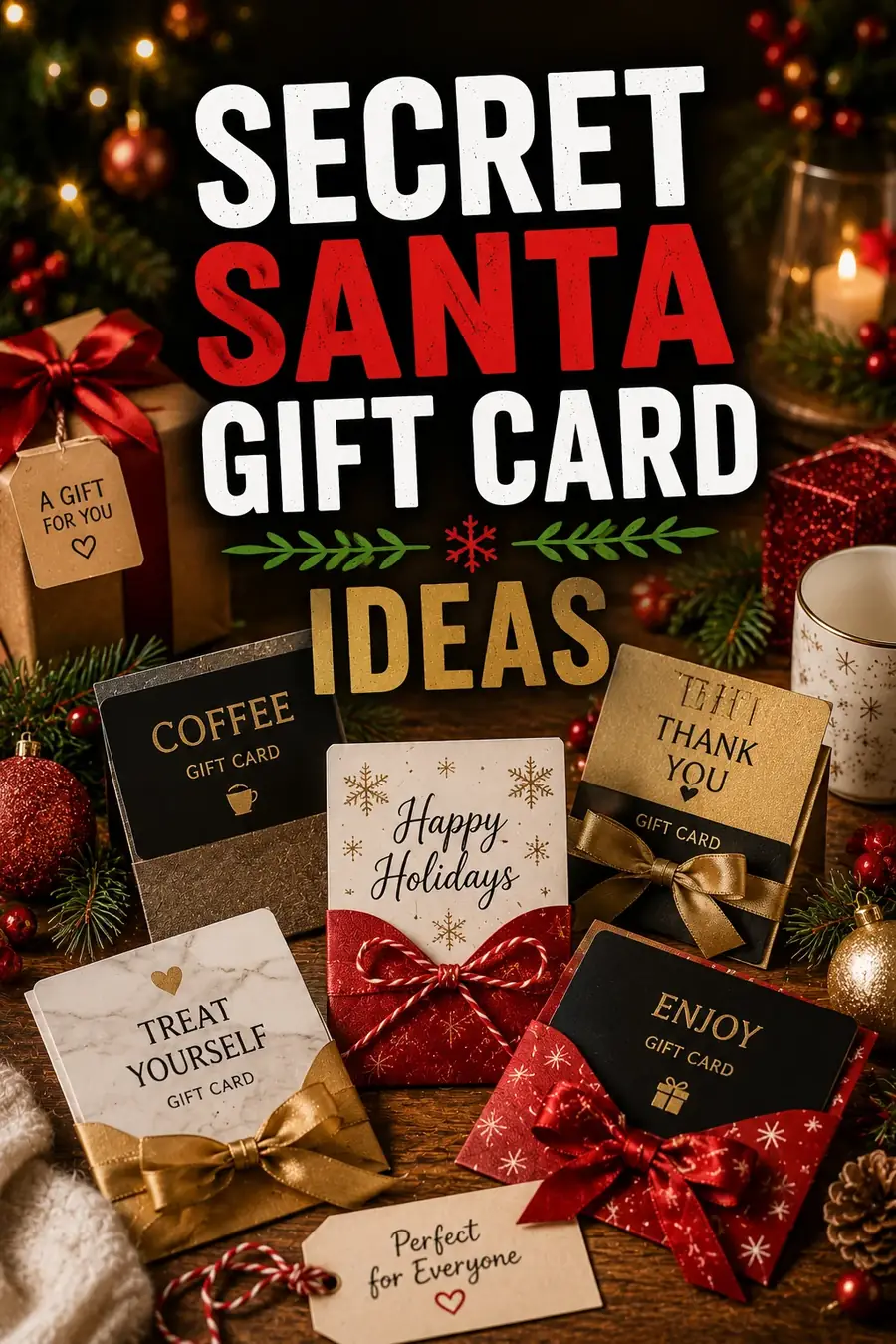
Every year the same debate flares up in group chats: is giving Secret Santa gift cards a thoughtful move or a lazy cop-out? One side says a gift card is just handing over money with extra steps. The other side says it's the only present that never gets returned, regifted, or shoved in a drawer. Both sides have a point. The truth is that secret santa gift cards can be either — genuinely welcome or completely forgettable — and the difference comes down entirely to how you choose and present them.
This guide takes an honest look at when gift cards work, when they fall flat, and how to give one that feels like you actually thought about the person. Because you can, and it's easier than you'd expect.
Are Gift Cards Okay for Secret Santa?
Short answer: yes. Longer answer: yes, when they're done thoughtfully.
Here's the honest case for them. A gift card lets the recipient pick exactly what they want, in the right size, color, and flavor. Nobody ends up with a candle they'll never light or a mug that doesn't match their kitchen. For a coworker you barely know, or a Secret Santa draw where you pulled a name you've never actually spoken to, a well-chosen gift card is often more useful than a guessed-at object. It respects the fact that you don't know their taste well enough to gamble.
And practically speaking, gift cards solve real problems. They travel flat in a card, they don't need assembling, and they work perfectly for long-distance exchanges where shipping a physical gift is a hassle.
Now the honest downside. Gift cards fall flat when they read as an afterthought — a generic card grabbed at the last second, handed over with no wrapping, no note, and no thought about whether the person would ever use it. A gift card to a place they'd never shop feels worse than a random object, because at least the object required a guess. The failure mode isn't the gift card itself. It's the absence of care around it.
So the rule is simple: a gift card is okay when it's chosen for that person and presented like you meant it. It's not okay when it's a shrug in an envelope.
How to Give a Gift Card Without It Feeling Impersonal
This is the whole game. A little effort here transforms a gift card from "meh" to "oh, they actually get me." Three moves do most of the work.
Pair it with a small item. This is the single best trick. A coffee-shop card tucked next to a nice mug, a cozy pair of socks, or a bag of fancy marshmallows instantly feels like a real gift. The small object gives the recipient something to unwrap and hold, and the card extends it. You're not spending much more — a five-dollar add-on does the emotional heavy lifting.
Pick a card that actually fits them. A generic all-purpose card says "I don't know you." A card to the specific coffee place they mention every Monday says "I've been paying attention." Even inside a budget, choosing the right category signals thought. If they're always talking about a hobby, a book, a show, or their morning latte, that's your answer.
Presentation matters more than the amount. Don't hand it over naked. Slide it into a real card with a handwritten note, wrap it in a tiny box, or tuck it inside something clever. Two minutes of wrapping changes the entire read of the gift. A gift card that's clearly been considered and packaged never lands as lazy.
If you're stuck on what fits the person, our full Secret Santa gift ideas guide is a good place to spark ideas you can pair a card with.
Best Gift Card Types by Recipient
You don't need to know a brand to nail this — you just need to match the category to the person. Here's how to read the recipient and pick a type that fits.
For the coffee lover. A card to a coffee shop or cafe is a near-guaranteed win for anyone who runs on caffeine. It funds a ritual they already have and love. Pair it with a travel mug or a bag of good beans and you've got a complete, cozy gift.
For the foodie. A card to a nice restaurant, a specialty food shop, or a food-delivery service works beautifully for someone who loves to eat or cook. It gives them permission to treat themselves to something they might not buy on a normal week.
For the bookworm. A bookstore card — physical or online — is one of the safest, most-appreciated picks going. Readers always have a to-read list, and a card means they get to choose the next one. Tuck it inside a bookmark or a cute notebook.
For the gamer. A card to a gaming platform or store lets them grab a game, add-on, or subscription they've had their eye on. This is a category where a gift card genuinely beats guessing, because game preferences are deeply personal and constantly shifting.
For the general "I have no idea" recipient. When you truly don't know the person — a big office draw, a name you've never met — a flexible option works: a card to a large general retailer, a streaming or entertainment service, or a broadly useful marketplace. It keeps things open without feeling random, especially when you pair it with a small universal treat like nice chocolate.
The pattern across all of these: pick the category that matches something you actually know about them, even if it's just one small detail.
Gift Card Amounts by Budget
Most Secret Santa exchanges set a spending limit, and gift cards should sit comfortably inside it. Here's a rough guide to help you decide how much to load and how to round out the gift.
| Budget | Suggested Card Amount | How to Round It Out |
|---|---|---|
| Under $10 | $5 card | Pair with a small treat or a handwritten note |
| $10–$20 | $10–$15 card | Add a low-cost themed item (mug, socks, snack) |
| $20–$30 | $20 card | Pair with a nicer small gift so it feels complete |
| $30–$50 | $25–$40 card | A standalone card is fine at this level, but wrap it well |
| $50+ | $50 card | Generous on its own; presentation still matters |
A couple of notes. At lower budgets, the paired item matters more — a $5 card alone can feel thin, but a $5 card next to a $5 treat feels like a real, considered gift. At higher budgets, a card can stand on its own, but never skip the wrapping and the note. And whatever the amount, keep it inside the group's limit; a card that's obviously over budget can make others feel awkward rather than delighted.
Fun Gift-Card Presentation Ideas
The wrapping is where a gift card earns its keep. A few easy ideas that turn a flat card into a moment:
- The nesting box. Put the card in a small box, inside a bigger box, inside a bigger one. The unwrapping becomes a bit and everyone watches.
- Tuck it in a themed item. Slide a coffee card into a mug, a bookstore card into a book, a card into a cozy sock. The container hints at the card inside.
- The balloon. Pop the gift card inside a balloon before inflating. They have to pop it to get the gift — chaotic and fun in a group setting.
- The scavenger hunt note. Write a short clue that leads them to where you've hidden the card. Great for exchanges where people linger.
- The scratch-off reveal. Cover a handmade card with a scratch-off sticker so there's a small surprise before the reveal.
- The mini gift basket. Nestle the card in a small basket or mug with a few themed snacks. It reads as a full, generous gift for very little extra cost.
None of these take long, and every one of them changes the story from "here's some money" to "here's something made for you."
When NOT to Give a Gift Card
Gift cards aren't always the right call. Skip them when:
- The exchange has a theme or a "no gift cards" rule. Some groups explicitly ban them to keep things creative. Read the room and the gift exchange rules your organizer set before defaulting to a card.
- You know the person well. If you genuinely know their taste, a chosen object usually beats a card. Save the gift card move for people you don't know well — that's where it shines.
- The card would go to a place they'd never use. A card to a store or service they have no interest in is worse than a small thoughtful object. If you can't name a category that fits them, a card isn't the answer.
- The whole point is the fun of unwrapping. In playful or gag-heavy exchanges, a flat card can feel anticlimactic unless you dress it up with one of the presentation tricks above.
When in doubt, the pair-it-with-something rule rescues almost any gift-card situation.
Frequently Asked Questions
Are gift cards a good Secret Santa gift?
Yes, when they're chosen for the person and presented with care. A gift card that matches a hobby or habit, tucked into a real card or paired with a small item, is thoughtful and always usable. A generic card handed over with no wrapping is where they earn their lazy reputation.
How much should a Secret Santa gift card be?
Match it to your group's spending limit. If the cap is $20, a $15–$20 card works, and at lower budgets it helps to pair a smaller card with an inexpensive treat so the gift feels complete. Never load a card that obviously blows past the limit.
Is it rude to give a gift card for Secret Santa?
Not at all — unless the exchange specifically bans them or the card is clearly an afterthought. Rudeness comes from a lack of effort, not from the format. A well-matched, nicely wrapped gift card reads as considerate, especially for someone you don't know well.
What's the best gift card for someone you don't know?
A flexible option like a card to a large general retailer, a streaming or entertainment service, or a broad marketplace covers most people. Pair it with a small universal treat like nice chocolate so it doesn't feel impersonal, and you've got a safe, welcome gift for almost anyone.
Gift cards get unfairly dismissed as the easy way out, but the truth is kinder: given with a little thought, they're one of the most reliably appreciated presents in any exchange. Pick a category that fits the person, add a small something, wrap it like you mean it — and you've turned "just a gift card" into a gift they'll actually be glad to open. Ready to draw names and get started? Our free Secret Santa generator handles the whole exchange in about two minutes.